Friday, May 30, 2014

The 6 Most Clever Marketing Stunts of 2014 - So Far


Fellow Marketers
Sometimes we get so involved in advertising we forget about marketing.  It is about more than advertising.  Sometimes marketing ideas can generate more response then the very best ads.  This is the very definition of viral marketing.

I knew I would have to share this article as soon as I saw it earlier today in the Marketing Dive.  The 6 most clever marketing stunts of 2014 (so far).  Amazon seems to always find ways to catch competitors off guard….  But the DHL stunt is my favorite… 

By Wendy Parish
May 30, 2014 |


If there’s one thing the marketing world loves to do, it’s pull off a stunt. Some are successful, while others just come off looking kind of silly – but all offer their own lessons. We’re only midway through 2014, but the year has seen no shortage of brands tapping into their creativity to grab the attention of media and consumers alike.
Here are six of the most clever stunts we’ve seen in 2014 so far.

 1. Pornhub’s G-rated search for a creative director
Typically, adult brands keep to themselves and spend their time advertising on like-minded sites, hoping to attract viewers already looking at similar material elsewhere.  With views becoming a little more relaxed, however, Pornhub decided to venture into mainstream advertising with a G-rated ad campaign.
With the site also on the lookout for a new creative director, what better way was there to vet candidates than by launching a competition to create that very campaign? Over 1,200 safe-for-work entries were received, and the playing field has since been narrowed down to 15 finalists, whose work was posted on Pornhub’s Tumblr for followers to vote on.
Aside from vetting candidates, the contest provided Pornhub a wealth of content that it can now disperse through social media. 



2. Amazon’s big orange locker

Amazon is no stranger to a good stunt. Remember the drones? Not one to rest on its laurels, Amazon dropped a huge orange locker in front of San Francisco’s iconic Ferry Building earlier this month. Initially unmarked aside from an Amazon logo, the locker remained a mystery for a few days while the online retailer stayed mum on its contents. Eventually, the hashtag #giantlocker and a Nissan logo were added to the side of the container, stoking social media conversation.
Ultimately, the stunt was part of a partnership to promote the new Nissan Rogue. Those using the hashtag on social media would be entered to receive codes corresponding to different prize-filled compartments on the locker, with the ultimate prize being a Nissan Rogue.
Nothing creates viral gold like a mystery. And prizes. 

https://www.youtube.com/watch?feature=player_embedded&v=NE9ujQ1zJos


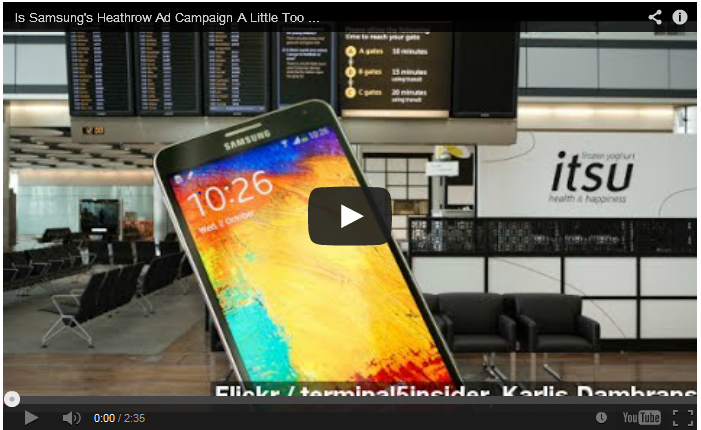
3. Samsung rebrands Heathrow Airport terminal

For two weeks this year, travelers using Terminal 5 in London’s Heathrow Airport, were greeted with a Samsung overload. The Korean electronics company had rebranded the area “Terminal Samsung Galaxy 5.”
The new name was meant to promote the new Galaxy 5 smartphone in what is the busiest terminal in one of the world’s busiest airports. Needless to say, a whole lot of eyes saw Samsung’s signage. The brand also had reps set up in the terminal to demo the device.
The deal was the first of its kind – no other brand has ever temporarily renamed an airport terminal or taken over all signage in one wing.
https://www.youtube.com/watch?v=sAdkREQ4144&feature=player_embedded


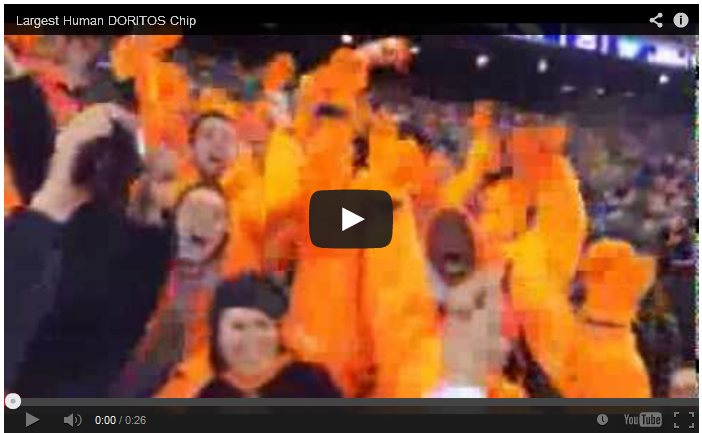
4. Doritos photobombs the Super Bowl

A 30-second Super Bowl commercial this year ran about $4 million dollars. Looking to sidestep that hefty price tag, Doritos crafted a stunt that helped it cash in on the hype while saving millions.
The brand enlisted 30 people in one section of the crowd to wear orange, planning it so they were arranged in the shape of a Dorito. From afar, that section did bear resemblance to one of the popular nacho cheese chips.
The stunt garnered Doritos thousands of retweets and favorites on Twitter. In addition to its social media success, the stunt resulted in record from RecordSetter.com for the World’s Largest Human Dorito.
https://www.youtube.com/watch?v=91DiaAoVH8M&feature=player_embedded

5. DHL gets rivals to deliver marketing messages
DHL pulled off a rather ruthless stunt a few months ago when it turned rival delivery drivers into its own walking advertisements.
The company had large boxes wrapped with thermo-active foil that, when chilled below a certain temperature, turns black. When delivery drivers from UPS and TNT picked up the packages, they couldn’t see the messaging on the chilled boxes. As the boxes warmed up, they displayed the message “DHL is faster.” In order to give the foil time to warm up, the addresses for delivery were intentionally difficult to find and maneuver a huge box to.
In a statement to the Consumerist, DHL denied having direct involvement with the prank, which it said was part of an internal competition by an external agency. DHL says it knew about the stunt, but didn’t know the video would be made public. Despite the questionable authenticity, it’s undeniable that the video’s quick ascent to viral status scored plenty of attention for DHL. 

https://www.youtube.com/watch?v=vHVWegNfQl0&feature=player_embedded

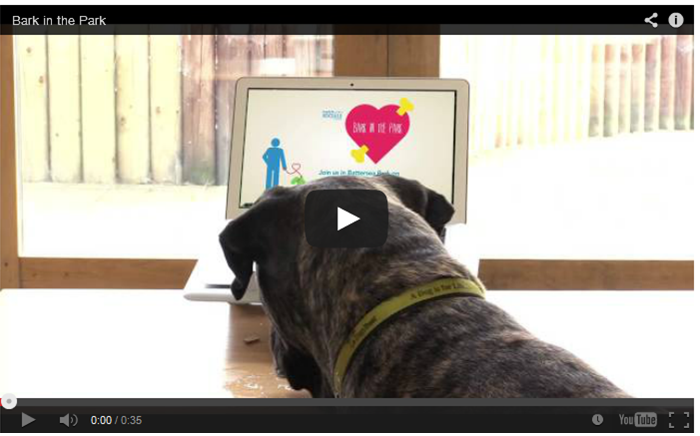
6. Match.com’s dog-food-scented posters

In an effort to find more ways for singles to meet in real life, Match.com launched a series of social events to bring people with similar interests together. The first of those events was aimed at dog-owning singles.
In order to promote the “Bark in the Park” event, Match.com created a bunch flyers and put them around London’s Battersea Park. On its face, that doesn’t seem like a clever marketing stunt, but it’s the composition of the posters that makes this promotion unique – they were all scented like dog food in order to draw in walkers’ dogs and make it impossible to avoid seeing the event’s details.
By essentially marketing to dogs, Match indirectly reached their owners in its bid to attract more singles to its match-making service.
https://www.youtube.com/watch?feature=player_embedded&v=1Q8LziFisNw


Monday, May 5, 2014

If a Tree Falls in the Forest and No One is There to Hear It....

There is a great article in the May 3rd New York Times by David Segal titled The Great Unwatched.

Take a moment to read it.  The topic is not new to this post, but it provides a unique perspective of the video aspect of online advertising. 

One of my favorite passages.. “There is so much junk between us and the companies that buy ad space on our pages it will blow your mind,” he explained. “It would take us weeks of research to figure out which ad network provided that ad.” Alex Treadway, The Daily Caller

The video fraud problem is not new, but it is becoming more important.  

"The very best marketing comes from observing consumer behavior and inserting your message into their behavior."  So as the number of videos online has increased and consumers spend more time watching them, the race is on to monetize this behavior.  And anytime there is a chance to make money, you will have individuals who will attempt to cheat the system.  See 51% of Web Traffic is Fraudulent.

So what is the industry to do?  One possible solution is to embrace hiring third party online auditing firms like BrandAds.  So you receive the ad network/exchanges click, impression, CTR report and you independently verify the information by hiring firms like BrandAds to authenticate the data.  (Full discloser - I do not know anything about BrandAds other than what I read in the NY Times article.) 

Yes, I know this will cost more money.  Build it into your pricing model.  As an individual who has been on both sides of the media buying desk, I am more than willing to pay a few more cents for verifying that the inventory I am buying is legitimate.  This verification happens all the time in television using spot logs.  As a buyer you can be assured that your 5:19:00 pm spot ran on KSAT.  No guessing, no wondering, no hoping.  It is an expected behavior in the business.

And yes, I know it looks like we don't trust our ad network/exchanges to accurately report this information.  It is because we (the industry) don't trust the information we are being given.  Too much secrecy.  Not enough transparency.  I hope this isn't the only solution, but perhaps it could be the catalysis to get our industry to act.  Our reputation is on the line. 


Tuesday, April 22, 2014

Why Digital is So Important to TV Broadcasters

A lot of people ask me why local broadcast TV stations are investing so heavily in digital.  In a recent article on BusinessWeek.com - Aereo's Day in Court Won't End TV as We Know It - I found the following two charts. 


Note that the number of hours that the Average User watches broadcast TV continues to decline - from close to 700 hours per user per year in 2004 to a little more than 600 hours in 2012.


While the revenue from retransmission fees continues to increase - from next to nothing in 2006 to 10% of revenue in 2012.  Almost $4 billion dollars.

In 2013, time spent with digital media among US adults surpassed time spent with TV for the first time—with mobile driving the shift.

So what we see...
  • Consumers are watching less TV.
  • Broadcast stations are compensating for this loss in ratings (revenue) by raising retransmission fees. 
  • Consumers are spending more time with digital today than they do watching TV.
As some point, the rising price of retransmission fees will level off as the dwindling audience becomes less valuable to cable systems and other retransmission subscribers.  Broadcasters are looking for new revenue opportunities. 

Consider that Broadcast TV is actually in the content business.  We produce content and hopefully the viewing public watches it.  And consumers are telling us through their behavior that they prefer to consume content online.  (The very best marketing comes from observing consumer behavior and inserting your message into their behavior.) 

So we invest in digital because we are simply following consumer behavior .  Our job is to develop great content and let the consumer watch it any way they prefer! 

Friday, April 11, 2014

Seven Facts Marketers Need to Know About Mobile Users

Since we have spent some time talking about mobile marketing and geo-fencing over the past two weeks, I thought I would share a great article I found on MarketingProfs.com.  Thank you Greg Webster for sharing.
 
1.   Mobile users are driven by the fear of missing something (FOMS).  This is the primary reason we check our phones so often. 
 
 
2.   Mobile devices are most used during “found time”.  On the way back from lunch today, Lewis, J.J. and I were talking about the good old days when you came back to the office to a stack of pink message forms.  Of course we were all checking our cell phones at the time looking for missed calls, texts and new emails.  Today if you have a moment of unused time, it is considered the perfect time to check your phone.  And instead of “thinking”, “reading” or “daydreaming”, we now kill time with a  mobile device.
 

3.   People pick up their smartphones upwards of 100 times every day.
 

4.   Mobile users spend more time on the home screen than any other screen – a staggering 26% of their time.  This is a message that more of us should pay attention to.  It is not only important to get your app downloaded, how do we get the consumer to post it on their Home Screen?
 

5.   Users respond to mobile alerts.  92% will pick up their device to check a missed call.  88% will pick it up to check a missed text. Another great reason to use mobile push alerts…
 

6.   Notifications drive behavior.  51% of smartphone users strongly agree that the first thing they do when they pick up their handset is check their notifications.  Mobile push alerts!
 

7.   The longer you have owned a smartphone, the more likely you are to pick up your phone and check for messages.
 
“The very best marketing comes from observing consumer behavior and inserting your message into their behavior.”


Thursday, April 10, 2014

The Power of Words

Words matter...  The following video is one minute and 47 seconds...  It elegantly sums up the power of marketing... 


Friday, April 4, 2014

Now Hiring!


“The very best marketing comes from observing consumer behavior and inserting your message into their behavior.”

It may seem strange to see an article about “Now Hiring” in a digital newsletter.  However, employees “technically” are people and that also makes them consumers, and the very best marketing comes from… 

While I was in Fredericksburg calling on businesses this week, I noticed a couple of interesting behaviors.  First, realizing this is a casual observation, it appeared that 75% of the individuals strolling around the city and working in the stores had their smartphones out.  And second, it seemed that every other business had a “Now Hiring” sign in the window.  So as I met with business owners I asked them about my perception – “It seems like there is a shortage of workers in the market.” 

Most of them answered pretty much the same – “There is a shortage of competent workers in the market.”  In a recent article in Forbes, Ken Sundheim described the “Ideal Employee”.  Action oriented, intelligent, ambitious, autonomous, displays leadership, cultural fit, upbeat, confident, successful, honest, detailed oriented, modest, hardworking, marketable (presentable to clients) and passionate.  “Does that describe who you are looking for?” 

They responded with an enthusiastic Yes!  “So what are you doing to recruit the ideal candidate?”

“I have the Help Wanted sign in the window.”

How is that working out for you?

The way I look at it, we hire people.  People have jobs and home lives.  If great employees are the life blood of your business, you should work as hard recruiting employees as you do recruiting customers.  These means reaching them where they live and work.  And while it is tempting to call the paper and place a help wanted ad, you are going to have to work harder to get your message in front of the right candidates for your business. 

There are only two types of prospects in the jobs market.  Those with a job and those without a job.  In most markets today, there is not a large pool of qualified, unemployed workers seeking employment.  So we are going to have target individuals who already have a job and have a compelling message to encourage them to talk to you. 

“The very best marketing comes from observing consumer behavior and inserting your message into their behavior.”

This marketing wisdom applies equally to targeting customers and employees.  So here is this week’s digital idea.  Insert your message (Now Hiring!) into their behavior.  Mobile geofencing is perfect.  Geofence your business, one to three miles, and get in front of employee prospects.  Geo-target your competitors and similar businesses that would likely provide quality employee candidates.  Geofence the parts of town where you have successfully hired quality employees.  And since the ads are running on a phone, the ad or landing page could say “Let’s talk!  Press here to be connected to a human being who wants to talk to you.”

I hear you.  “Do you have any idea how many people could call?”  Actually I do.  But your current problem is not “too many applicants”, it is too few employees. 
 
Most of today’s recruitment marketing is actually designed around screening.  NO PHONE CALLS PLEASE.  (I am not sure why they include PLEASE.)  The problem with so many layers of screening – much of which is simply designed to make someone’s job easier- is that it also can screen out that one special individual who could help you transform your business.  This type of marketing is recruiting equivalent of “I only want to advertise to people who are high volume buyers.”  If only it were so simple.

Personally I am leery of applying to a company who did not want phone calls.  If I have an opening on my staff, I want to fill it with the very best person available.  Since we work in a client facing business, the ability to communicate is rather important.  While the pain on the hiring side is that you have a position to fill, there is also pain on the applicant side.  If an individual is actively looking to change jobs, they are wondering if the hiring company’s problems are even worse than those of the company currently employing them.  There is fear on both sides of the hiring process.

The purpose of the ad is start the process of communicating with applicants.  When the phone rings it gives you the opportunity set the expectations and guide the process…  “The first thing I need you to do is to send me your resume…”  This is not an interview, it is the start of your normal hiring process.  Back to marketing…

You should be able to run multiple creatives in your current mobile campaign.  (If you can’t, give me a call!)  Example:  50% of your ads are targeted to new clients, while 50% of your ads are targeted to searching for new employees.  Great customers frequently make great employees and there is no reason your can’t use the same targeting parameters for both.  And when you find the perfect employee, change your targeting back to 100% customer acquisition.

“Jeff, when I think of (Help Wanted + Digital), I think I should be running an ad on a job board like Monster.com, Indeed or CareerBuilder.” 

There is no reason you can’t do that, but one of the disadvantages of relying on these job boards is that your ad can get lost in a sea of similar postings.  And you can be buried by unqualified candidates because it is so easy to submit an online application today.  “Spray and pray.”

By marketing to employment prospects outside of these channels, you more effectively reach prospects who may be “thinking” about a job change, but have not yet acted on this desire.  A great message (Let’s talk!) can be the impetus to contacting you before they start this search.  And since you are recruiting in the same pool of individuals that make great customers, you have a better chance to uncover someone who is passionate about your business. 

Targeting new employees can be accomplished using the same tactics you use to target new customers.

“So how do we target businesses?  I need to engage in B2B marketing.”

Well let’s think about it.  B2B marketing...  People do business with people, not companies…  Companies have never bought anything...  People buy, not companies...  I am sensing a trend.  I think we design a campaign to attract the people and the business will follow… 

Friday, March 28, 2014

Yes Virginia, We Are Tracking Your Mobile Phone

So what are some ideas for geofencing?  I ran a campaign in Ohio for a community college.  We geofenced seven universities/colleges with a one mile radius and distributed ads to students in the spring.  The message?  “Take classes this summer at the community college at half the rate of the university.  And all class credits are 100% transferable towards your university degree!” 

If you owned a restaurant and wanted to increase your lunch business, geo-target your competitors and serve up a strong call to action – “Save $Xxx on lunch today!”  The beauty of mobile geo-targeting is that it identifies the mobile device’s location below the zip code level and you can customize the size of the targeting area.  Here is an example of targeting the competition.  Your ads only run in the blue geo-fenced areas of your competitor. 


Target an event at the AT&T Center, Sea World, Six Flags, North Star Mall, UTSA, USAA, Valero Texas Open, NBA Finals, Texas vs. Baylor.  Thousands of people gathered at a single event makes a great opportunity to reach an unique audience all at one time.  “Leaving Sea World and looking for a great meal?” 

I have a client with an interesting opportunity.  While they are a market leader, they are in an industry plagued by a constant need to hire new employees to handle the increase in business.  Since they need employees with a particular skill, geofence the competition with a “Now Hiring” campaign. 

Targeting Based on Location History.  Smart phones today track where you use them and stores the data for 60 days.  Don’t believe me?  On your iPhone, view Settings, Privacy, Location Services and scroll to the bottom to System Services and select Frequent Locations.  At the bottom of this screen it will show you where you have been using your phone – talk, text or data – for the previous 60 days.   

If you sold automobiles, would you like to target people who have visited three or more competitors in the previous 60 days?  The only people who visit auto dealers this frequently are probably in the market for a new car.  We can target these individuals using their location history. 

For an auto repair company, we are targeting high mileage drivers by identifying individuals who filled up at gas stations 5 times or more in the previous 60 days within their 3 mile trade area.  

A pizza company used the weather activated feature by outlining their delivery area in advance.  When it started raining, they advertised “Stay inside.  We will bring dinner to you.”

How about a campaign that takes advantage of our ability to dynamically change the ad based on your current location?  For a food manufacturer we suggested an ad that changes the closer the individual is to the store selling the product.  “Only one mile to Bob’s market!”  As the prospect gets closer to the store the ad dynamically changes to “Only ½ mile to Bob’s Market!”  “Only 500 yards to Bob’s Market!”  Add in a mobile landing page with two buttons.  Button one outlines the step by step directions to Bob’s Market.  The second button offers a 50 Cents Off Coupon.  Simply press the button and the coupon image is saved to your photos folder on your phone.  Then you just show your coupon photo to the cashier! 

And lest we forget, this mobile device is also a phone, so for many clients, a “click to call” button is perfect. 

"Though no one can go back and make a brand new start, anyone can start from now and make a brand new ending."
    Carl Bard