Showing posts with label marketing. Show all posts

Friday, February 27, 2015

Why Movies Yield Better Research Than Photographs

"I checked the actuarial tables, and the lowest death rate is among six-year-olds," Buffett told Fortune. "So I decided to eat like a six-year-old."

Warren Buffett was joking. I think. Warren is a dichotomy. On one hand he is considered one of the brightest minds in the investment community. On the other, his reported diet is close to what a six year would choose, if given the option. Coca-Cola and ice cream for breakfast and Dairy Queen for every thing else.
But I chose this quote for another reason. it shows the danger of acting on simple research. Taken at face value, Warren has a point. The research clearly shows that six year olds have the lowest death rate and based on the "research", a decision has been made and acted upon. Marketers do this everyday.
"It doesn't do any good to sit up and take notice if all you do is keep on sitting."
Observe, record, extract truths and act. Marketing research. But actions based on acts of single event research are dangerous. It is like reviewing a photograph and making a decision based on the information contained in the photograph. What isn't included in the photograph may be more important than what is included. The more accurate method of decision making is to take a string of photographs (research snapshots) and string them together in a movie so you can identify developing trends, then develop your reaction accordingly.
"The very best marketing comes from observing consumer behavior and inserting your message into their behavior."
I have found that the best research is ongoing research. With digital marketing campaigns, I am frequently asked is "what is a good click through rate?" And my response is the same. It doesn't matter.
We are going to measure the movie, not the snapshot, and act accordingly. One of the most powerful aspects of digital marketing lies in the ability to report the ongoing results and optimize the campaign based on the results (research). If your current click through rate is 0.06% (snapshot), then our job is to make changes based on this information to improve the results. So you optimize the campaign by reviewing the web sites you are running on, dropping the poor performers and moving money to sites that are performing, you A/B test the creative, you A/B test the landing pages. In short you "observe consumer behavior and insert your message into their behavior".
And then you measure again. And make improvements again. Optimization does not have to be based on Click Through Rates. It can be based on any KPI. Cost Per Conversion, Cost Per Click. But the decision making should be based on the direction of the campaign results.
Are your decisions making the campaign results better?

Friday, January 2, 2015

The Fact Is, Emotions Won Over Facts

Last night the Ohio State Buckeyes beat the Alabama Crimson Tide in the Sugar Bowl.  And naturally the only thing I could think of after the game at 12:30 am was marketing.  
For weeks I have been hearing how Alabama was a 9 point favorite.  The oddsmakers analyzed both teams - strengths and weaknesses - and Alabama looked like a sure lock.  The smart Crimson Tide followers have already bought tickets to next week's "2015 DI Football Championship Game".  "Beat the rush.  Book now!"
But a funny thing happened.  The nine point underdogs, under the leadership of Urban Myer and company, showed up and played for the entire 60 minutes the game was scheduled.  And they prevailed.  Emotion seemed to fly in the face of facts.  The pre-game analytics were clear.  Alabama should have won the game.
If you watched the game at least half of the stadium was wearing the scarlet and grey of Ohio State.  Didn't they know that OSU had no chance of prevailing?  Didn't they have access to the same media (TV, radio, online, print) that had already given the victory to Alabama?  Were they that ignorant of the facts?  
Facts versus emotion.  No fact or set of facts, could convince an individual swaddled in scarlet and grey that Ohio State didn't have a chance. Anymore than a fresh set of facts could have convinced the Crimson Tide that their team could not prevail.
Which brings us back to marketing. All to often we marketers lean on facts, when we should be focusing on emotion.  Consumers rarely make up their minds based on being overwhelmed by facts.  But wrap them in emotion and their hearts, minds and wallets will follow.
The Ohio State fans that "knew" their team would win were not ignorant.  They saw the facts.  They simply choose to follow their hearts.  
"People don’t ask for facts in making up their minds. They would rather have one good, soul-satisfying emotion than a dozen facts." – Robert Keith Leavit
Consumers want to believe.  They want to hear an emotional filled story on why they should believe what you are trying to sell them.  
Not facts.  Not a David Letterman "Top 10 List of the Reasons Campbell Chicken Noodle Soup is better than Brand X...."  Not another "Anniversary Sale!"  Not another "We Pay the Sales Tax" promotion.  Tell me a story.
So the next time you are preparing a campaign for a client, remember how 50,000 members of the Buckeye Nation showed up, in the face of facts, for a game that no one thought they could win.  And nothing you could tell them would convince them otherwise.
Tell me a story.
"The biggest emotion in creation is the bridge to optimism."  Brian May

Monday, November 17, 2014

Facebook And The Malling of America


With the ongoing changes to Facebook, (Facebook Throttles Back Organic Reach...) I had a flashback to "The Malling of America".  In 1985 Charles Kuralt was quoted as saying "Twenty-five years ago, they weren’t here. Today they’re everywhere. What used to be farms or woods or country crossroads have become malls."

I had a front row seat to the "malling of America".  At the time I was working for Hickory Farms. Malls were falling over themselves to get Hickory Farms to open a retail store in their mall.  At the apex, we had 600 full time stores.  But as the developers filled their shopping centers, the power shifted. They still wanted national retail chains, only now they wanted them on their terms.  Rents escalated. Store design criteria changed - "We think your store should look like..." "Perhaps we can find room for you on the other side of the mall.  In the corridor leading to the petting zoo..."

And they could get away with it because they owned the real estate.  We were merely renters.

It occurred to me recently that this is the same struggle we have today with Facebook. "Come build you business with us! Everyone is welcome" said Facebook. 

But over the last 12 months, Facebook has changed its strategy.  In an effort to boost revenue, they started throttling back the number of followers who could see your postings. It used to be that your posts were shown to everyone who choose to follow you. Now if you post a message, only about 16% of your followers have a chance to see it.  Your options are to post the same message later and hope different viewers see it or you can boost your post by paying for additional feeds to your followers.

Now they are saying that News Feeds can longer look like or contain any elements of an advertisement.  "This is why we offer paid ads."

So we are back in the mall. Anytime you don't own the real estate, you are at the mercy of the landlord.  

While Facebook can still be a part of your marketing strategy (and there are a myriad of reasons to include it - reach, relatively low CPC and CPM, incredible targeting) I caution against allowing it to become your sole marketing program.

I still meet with business owners who are investing heavily in their Facebook presence while ignoring their own web site.  

Buyer (or lessee) beware.  

Interesting story came out after I posted this...

Forrester is advising marketers not to use Facebook if they want to build social relationships with their customers. 


Wednesday, November 5, 2014

Merry Christmas

Below is a link to one of my all time favorite advertisers and the history of their Christmas ads.  Storytelling at its finest.

Enjoy.

John Lewis' Christmas ads 2007 to 2013: from humble roots to national event


Friday, October 17, 2014

The Law of Leadership

In Al Ries & Jack Trout's 1993 marketing classic - The 22 Immutable Laws of Marketing - Violate Them At Your Own Risk - the very first law is The Law of Leadership.  

"The basic issue in marketing is creating a category you can be first in."


Being first is a commanding position to occupy, especially as time goes on.  They go on to ask a fairly simply question, "What's the name of the first person to fly across the Atlantic Solo?"  

Charles Lindbergh.

Who was the second?  I sense silence.  

With every client, I spend time asking them what makes them different than the competition.  And I preface it by saying the answer is not "great employees, marvelous customer service, family owned, years in business, etc."  Everyone says these things, so no one can own this positioning.  It turns out that answering the question "what makes you better than the competition" is harder to answer than you think.  And for the record, few consumers really care how long you have been in business (it didn't help Montgomery Wards), they don't care that you are family owned, and they don't believe all of your employees are the very best.

What can you tell your clients and prospects about you and your business that makes you number one in their eyes?  

Frequently the answer stares you in face.  It can be a fact that everyone already knows, but nobody is claiming ownership of it.  In the pizza business it might be "We deliver rain or shine." Do all pizza companies deliver rain or shine?  Of course.  But if you are first to claim this position, you have the chance to own the position in the mind of the consumer.  When the other pizza chains start advertising that they also deliver rain or shine, are they leading or following?  In the pizza business today, you have to deliver.  Why not position yourself as the leader in delivery? 

What service do you provide that is important in the mind of your clients?

When you think of fast food and breakfast, who do you think of?  McDonald's.  They pioneered drive through breakfast.

If I say Pizza, Pizza, you think of Little Caesars.  At least around here.

The point is, find a relevant point about your business where you can be seen as a leader and claim it.  And keep in mind, if you don't tell the prospect/client, you will not receive credit.  

By the way, Bert Hinkler was the second person to fly solo across the Atlantic.


Tuesday, September 23, 2014

Spending on Digital Ads to Overtake TV in 2017

Spending on Digital Ads to Overtake TV in 2017

Magna Global said U.S. digital ad revenue would reach $72.0 billion in 2017, compared with TV ad spending of $70.5 billion. Last year, digital accounted for $43 billion, with Magna forecasting it will reach the $50 million mark this year. 

I think they meant $50 billion this year...


By comparison, digital media advertising is already bigger than total TV spending in such countries as the U.K., Australia, Germany and the Netherlands. The fact that digital isn't the biggest ad category in the U.S. "shows the strength and resilience of television in the U.S. compared to other advanced ad markets despite the current plateau in viewing," Magna said.

Nothing new here.  This trend has been apparent for several years now. Consumers already spend more time with their digital devices than their TV.  eMarketer reported in August 2013,  "The average adult will spend over 5 hours per day online, on non-voice mobile activities or with other digital media this year, eMarketer estimates, compared to 4 hours and 31 minutes watching television."

Advertisers (and the advertiser's money) are simply following the consumer's behavior.  

My surprise is that the flow of money has not moved to digital more quickly.  I am surprised that more marketers are not proactively taking advantage of this trend towards digital engagement.  This is a generational opportunity  to get in front of the largest change in consumer behavior since the launch of TV.  

You have to hand it to the broadcast and cable industry.  They have done an admirable job of hanging on to advertiser's budgets in the face of a dominating change in consumer behavior.  Of course over the long haul, I am convinced that this trend will reverse itself.  

As shown in the diagram below, the newspaper industry has not figured out how to successfully re-invent itself in the face of consumer change.

"At the American Enterprise Institute’s Carpe Diem blog, Mark J. Perry finds that print ad revenues are now the lowest they've been since 1950, when the Newspaper Association of America began tracking industry data."


Borrell Associatesin their 2014 Benchmarking Local TV Stations Online Revenue, talks about the importance of capturing digital in local markets to offset the impending loss of broadcast dollars.  

Much of the the good news in Broadcast TV comes from the relatively new (2008) explosion in retransmission fees.  These are fees that local broadcast stations now charge cable and satellite companies to rebroadcast their signal.  

The problem is that TV ratings continue to decline.  There are more programs and channels to watch than ever before.  But the net result of this fragmentation is that the audience watching an individual show continues to decline.  (Consumer behavior).  So the biggest hits of today (excluding special events like The Super Bowl) - NBC Sunday Night Football - generated a 12.8 rating last year.  In 1952, I Love Lucy generated a 67.3.  In the 1960's the highest rated show was Gunsmoke at a 40.3.  In the 1970's All In The Family topped the charts at a 34.0.  1980's - The Cosby Show was the only show that topped a 30 rating.  In the 1990's, ER generated a 22.0.  Notice a trend?  


Over the next few years, we are going to see an increased shift in advertising dollars into digital marketing.  And much of this shift will come at the expense of TV.  Look how the change in consumer behavior decimated the newspaper industry.  Most TV broadcasters have done an admirable job at trying to increase their expertise into the digital arena over the previous 5 years, but many are still saddled by a management team at the local market level that talks about the digital transition, but still lives and breathes TV, at the expense of digital revenue.  In many cases, digital, even their own products, is the competition.  

"The very best marketing comes from observing consumer behavior and insetting your message into their behavior."

Friday, May 30, 2014

The 6 Most Clever Marketing Stunts of 2014 - So Far


Fellow Marketers
Sometimes we get so involved in advertising we forget about marketing.  It is about more than advertising.  Sometimes marketing ideas can generate more response then the very best ads.  This is the very definition of viral marketing.

I knew I would have to share this article as soon as I saw it earlier today in the Marketing Dive.  The 6 most clever marketing stunts of 2014 (so far).  Amazon seems to always find ways to catch competitors off guard….  But the DHL stunt is my favorite… 

By Wendy Parish
May 30, 2014 |


If there’s one thing the marketing world loves to do, it’s pull off a stunt. Some are successful, while others just come off looking kind of silly – but all offer their own lessons. We’re only midway through 2014, but the year has seen no shortage of brands tapping into their creativity to grab the attention of media and consumers alike.
Here are six of the most clever stunts we’ve seen in 2014 so far.

 1. Pornhub’s G-rated search for a creative director
Typically, adult brands keep to themselves and spend their time advertising on like-minded sites, hoping to attract viewers already looking at similar material elsewhere.  With views becoming a little more relaxed, however, Pornhub decided to venture into mainstream advertising with a G-rated ad campaign.
With the site also on the lookout for a new creative director, what better way was there to vet candidates than by launching a competition to create that very campaign? Over 1,200 safe-for-work entries were received, and the playing field has since been narrowed down to 15 finalists, whose work was posted on Pornhub’s Tumblr for followers to vote on.
Aside from vetting candidates, the contest provided Pornhub a wealth of content that it can now disperse through social media. 


2. Amazon’s big orange locker

Amazon is no stranger to a good stunt. Remember the drones? Not one to rest on its laurels, Amazon dropped a huge orange locker in front of San Francisco’s iconic Ferry Building earlier this month. Initially unmarked aside from an Amazon logo, the locker remained a mystery for a few days while the online retailer stayed mum on its contents. Eventually, the hashtag #giantlocker and a Nissan logo were added to the side of the container, stoking social media conversation.
Ultimately, the stunt was part of a partnership to promote the new Nissan Rogue. Those using the hashtag on social media would be entered to receive codes corresponding to different prize-filled compartments on the locker, with the ultimate prize being a Nissan Rogue.
Nothing creates viral gold like a mystery. And prizes. 

https://www.youtube.com/watch?feature=player_embedded&v=NE9ujQ1zJos


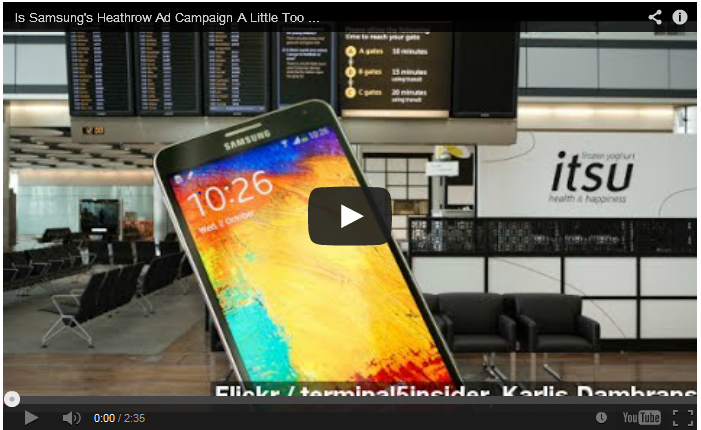
3. Samsung rebrands Heathrow Airport terminal

For two weeks this year, travelers using Terminal 5 in London’s Heathrow Airport, were greeted with a Samsung overload. The Korean electronics company had rebranded the area “Terminal Samsung Galaxy 5.”
The new name was meant to promote the new Galaxy 5 smartphone in what is the busiest terminal in one of the world’s busiest airports. Needless to say, a whole lot of eyes saw Samsung’s signage. The brand also had reps set up in the terminal to demo the device.
The deal was the first of its kind – no other brand has ever temporarily renamed an airport terminal or taken over all signage in one wing.

https://www.youtube.com/watch?v=sAdkREQ4144&feature=player_embedded


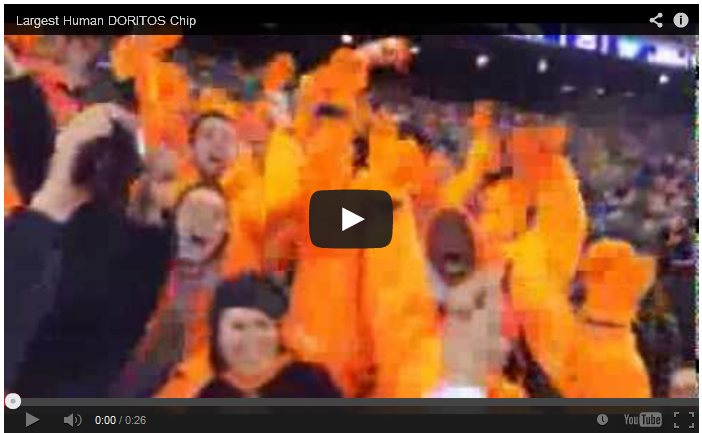
4. Doritos photobombs the Super Bowl

A 30-second Super Bowl commercial this year ran about $4 million dollars. Looking to sidestep that hefty price tag, Doritos crafted a stunt that helped it cash in on the hype while saving millions.
The brand enlisted 30 people in one section of the crowd to wear orange, planning it so they were arranged in the shape of a Dorito. From afar, that section did bear resemblance to one of the popular nacho cheese chips.
The stunt garnered Doritos thousands of retweets and favorites on Twitter. In addition to its social media success, the stunt resulted in record from RecordSetter.com for the World’s Largest Human Dorito.

https://www.youtube.com/watch?v=91DiaAoVH8M&feature=player_embedded

5. DHL gets rivals to deliver marketing messages
DHL pulled off a rather ruthless stunt a few months ago when it turned rival delivery drivers into its own walking advertisements.
The company had large boxes wrapped with thermo-active foil that, when chilled below a certain temperature, turns black. When delivery drivers from UPS and TNT picked up the packages, they couldn’t see the messaging on the chilled boxes. As the boxes warmed up, they displayed the message “DHL is faster.” In order to give the foil time to warm up, the addresses for delivery were intentionally difficult to find and maneuver a huge box to.
In a statement to the Consumerist, DHL denied having direct involvement with the prank, which it said was part of an internal competition by an external agency. DHL says it knew about the stunt, but didn’t know the video would be made public. Despite the questionable authenticity, it’s undeniable that the video’s quick ascent to viral status scored plenty of attention for DHL. 

https://www.youtube.com/watch?v=vHVWegNfQl0&feature=player_embedded

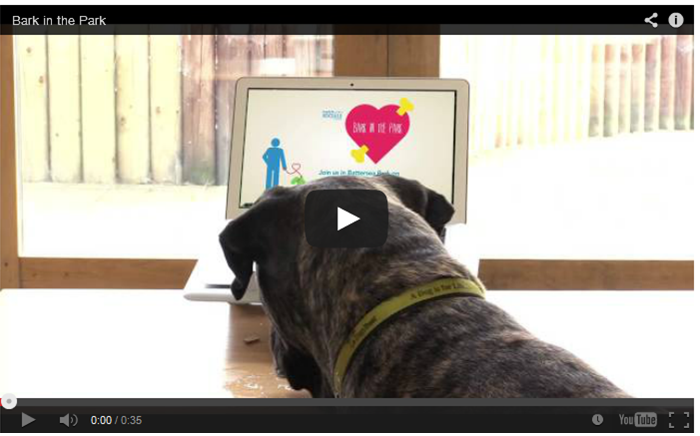
6. Match.com’s dog-food-scented posters

In an effort to find more ways for singles to meet in real life, Match.com launched a series of social events to bring people with similar interests together. The first of those events was aimed at dog-owning singles.
In order to promote the “Bark in the Park” event, Match.com created a bunch flyers and put them around London’s Battersea Park. On its face, that doesn’t seem like a clever marketing stunt, but it’s the composition of the posters that makes this promotion unique – they were all scented like dog food in order to draw in walkers’ dogs and make it impossible to avoid seeing the event’s details.
By essentially marketing to dogs, Match indirectly reached their owners in its bid to attract more singles to its match-making service.

https://www.youtube.com/watch?feature=player_embedded&v=1Q8LziFisNw


Thursday, April 10, 2014

The Power of Words

Words matter...  The following video is one minute and 47 seconds...  It elegantly sums up the power of marketing... 


Friday, February 28, 2014

How Internet Ads Work or "I am Watching You!"


Probably the single most frequent question I am asked is some variation of How does Internet advertising work?" "Why do I keep seeing the same ad on multiple web sites? Are they following me?"

Yes they are. 

Here is a link to an interesting slide show that walks you through the progression of how ads are served up to you on web sites.  “The very best marketing comes from observing consumer behavior and inserting your message into their behavior.”  And today’s ad servers follow this principle to the letter… 

As soon as you visit a web site, the ad server is looking at you.  Not you specifically, but it is looking at the cookies on your hard drive, building a profile of the individual who uses the computer.  Every web site you visit drops a cookie (a small piece of code used for tracking) on your computer.  In most cases, it is your profile that determines which ad is place on a web site during your visit.  Visit a lot of health related sites and you are likely to see ads for medical practices.  Looking at the latest fashion?  Ads for Nordstrom’s, Zappos and even Amazon will show up.

Search retargeting works much the same way.  Ad servers pour over your search history and serve up ads based on your actions. 

If you prefer some to maintain some privacy, it is a simple process to eliminate these cookies.  Here is the link showing you how to delete existing cookies on a PC.  However, keep in mind that if you delete all cookies, you may find that a web site requiring a user name and password will ask you to provide your credentials every time you visit.  No more automatically recognizing you when you appear.

This same link will also show you how to block cookies from being placed on your computer.  The downside is that many web sites today simply will not allow you to visit their site without allowing cookies, so there is a tradeoff.   A more practical approach will be to follow the rules for Customize Cookie Settings which allows you set up specific web sites to allow or block cookies. 

Visit the link to slide show and let me know if you have any questions.

Friday, February 7, 2014

Five Ideas to Launch a Mobile Campaign With Little or No Money Down


Now that the excitement of the holiday season and the Super Bowl are behind us, it’s time to get back to looking at some research and best practices. 


“Mobile devices drove consumers to spend more time online while on the go. Paid-search marketers worldwide allocated 34.4% to mobile devices in 2013, with phones capturing 17.7% and tablets receiving 16.7% -- up from 20.5% in 2012.”

Retailers Are Driving Huge Increases In Mobile Shopping And Buying — This Is How

“On Black Friday this past year, sales on mobile devices accounted for more than 20% of U.S. e-commerce spending. Traffic from mobile was even bigger, accounting for almost 40% of total online shopping visits that day.” 

Six Trends for 2014 in Mobile Marketing and Advertising

“With over 75% growth in mobile advertising in 2013 (AdAgeMobile Fact Pack) mobile is no longer an emerging channel.”

“The very best marketing comes from observing consumer behavior and inserting your message into their behavior.”

Knowing that consumers are stampeding to mobile devices doesn’t mean that you are ready to engage them on mobile devices. 

Recently I worked on a display campaign for a client with a mobile component.  So I visited the “mobile” landing url and saw that the client did not have a mobile friendly web site.  What I found myself staring at was a large web site smashed into a little 4 inch screen.  It could have been the best offer in the history of retailing, but I would never know.  I simply could not see what the company was offering, much less be able to navigate to find it. 

Five Ideas to Launch a Mobile Campaign for Little to No Money

·       First have a mobile enabled web site.  Ideally you have a responsive web site (or plans to launch a responsive web site). 

·       But if your site isn’t mobile friendly, you can still have a mobile campaign. 

o   Build a mobile site.  There are tools that allow you to build mobile web sites for a very small investment.  $Hundreds, not $Thousands.  If you don’t have these tools, contact me.  If the only thing that is stopping you from mobile advertising is a mobile site, I am going to fix that problem. 

o   Keep in mind that most of our clients do not need a fully function ecommerce mobile web site.  They need a way for the sales prospect to contact them in the manner most convenient to them – email, phone, walk in the front door. 

o   Make sure you have the basics in place. 

o   Import a logo and few graphics/photos.

o   Add your contact information – Name, address and phone number. 

o   Add a “Click here for directions”. 

o   Post your hours of operation.

o   It is a mobile site.  Use Click to Call.  Questions?  “Click here to talk to a real human!”  (When was the last time a business encouraged you to call them?)

o   Add a mobile offer.  “Bring your phone in, show this coupon for a free dessert, save $5, Save 10%, etc. 

·       Eliminate clicks.  Make sure the ad takes you to the page where the customer can say “Yes, I’ll take it.” 

·       Want to know if the mobile site is working?  Use an offer or tracking code that the consumer would not see anywhere else.  Save $5.55!  Make this offer unique to this mobile campaign.

·       Track the results.  If you don’t have a computer system to track the sales, use a shoe box.  Print a stack of coupons with the mobile offer on it.  Every time a consumer uses the “mobile coupon”, write the total sale amount onto a coupon and throw it in a box.  At the end of the day/week/promotion, add up the amounts and see how successful the promotion was… 

Mobile advertising is exciting and frightening at the same time.  But there are ways to engage customers without initially spending a lot of money…

Friday, January 31, 2014

“Tell me what you read and I'll tell you who you are.”


“Tell me what you read and I'll tell you who you are.”

                 -- ancient proverb

Below you will find four of my favorite reads – out of a library that is way too large to be sensible 
 

Selling the Invisible is pure analog in a digital world.  It remains my favorite book of all time and I have given away hundreds of copies over the years.  Originally published in 1977, it is a marketing classic.  When I taught a marketing class for new franchisees at Tuffy Auto Service Centers, it was required reading.  I gave everyone who attended a copy.  I still read this book each year and continue to discover new ideas that can be applied to business today.  I believe the longest chapter is 4 pages.  Among his gems, “Too often, service sucks.”  Before you launch a marketing campaign, fix your service.  “Bad news, you are competing with Walt Disney.” (Page 8)   Be sure to read, “A Butterfly Named Roger” (page 11).  “Life is Like High School” (page 51).  “Brands and the Baby-Sitter” page 163.  Better yet, it is only 250 small pages.  Read it all. 


What makes things popular?  Jonah Berger looks at why people talk about some ideas and products but not others.  He looks beyond advertising and focuses on what gets consumers talking.  Look at Social Currency (page 29) – we share things that make us look good.  Learn why a cheesesteak costs $100 and is a best seller (page 2).  How Kit Kat used coffee as a trigger to boost sales (page 81).  Social proof (page 128) and why the line at a restaurant reaches around the block… 


You see this book advertised a lot on Linked In.  I was exposed to it by ChrisTiutan at Optimizely.  Dan and Pete are the co-founders of Optimizely and wrote the book.  A/B Testing gives you a lot of ideas and case studies on how the smallest changes on your web site can yield amazing results.  Test and measure.  I find that the concept really embodies a way of thinking that applies outside of web sites, and is really a commentary on how marketers should not take anything for granted.  Test and measure other marketing decisions.  You never know when a change of a single term from “Submit” to “Support” means millions of dollars (page 61). 

 
Actually anything by Gladwell is a great read.  I also like David & Goliath, The Tipping Point (Troy and I were talking about The Tipping Point earlier this week.), What the Dog Saw and Outliers.  “Blink is a book about those first two seconds.”  The first two seconds is when many of us make our decision.  Gladwell shares stories that quantify this intellectual/emotional reaction and explains how most of the time we are….  You will have to read it to find the answer. 

Enjoy the weekend.

Go Broncos.
 
 
“Vision is the art of seeing things invisible.” ~ Jonathan Swift


Friday, January 17, 2014

The Power of Storytelling


Years ago I learned the first step to solving a problem to assign blame…   At least it seems that way in many organizations. 

When a campaign doesn’t achieve the anticipated results, who is to blame?

Usually the argument comes down to Targeting versus Creative.  Today I want to look at the creative side of the equation.  Typically I spend my time talking about the targeting side of digital marketing, but the Creative side of a campaign is equally important.  It is one of the reasons I am a big proponent of A/B testing.  Launch with two or three versions of the creative and let the consumer vote on which one is most effective, then optimize towards the results. 

One of my favorite campaigns goes back to my days at Hickory Farms.  It embodied the very essence of storytelling.  Three spots for the upcoming Christmas season focused on storytelling.  We felt that story telling was the very best method for explaining why a Hickory Farms gift was different from all the other gifting choices available at the holiday season.   It was not Hickory Farms versus Harry & David, but Hickory Farms versus the mall!

The spots were beautifully done (we spent more than a million dollars creating them) and each one was shot on location.  For our Sweet Elegance chocolates we took you to the factory and showed the ladies hand dipping each piece…  For the preserves spot we took you to a farm in Michigan where the blueberries were grown and picked by hand before being transformed into Hickory Farms Blueberry Preserves…  Beautiful work.  (I wonder what Jack Bancer is doing now.)  Beautiful results. 

Recently while scouring the web I came across a great article - How to Use the Persuasive Power of Mini-Stories in Your Sales Copy and it reminded me of the power of great storytelling in advertising.  Stories are spellbinding and persuasive because the reader experiences a different world. Jeremy Dean explains that when we’re transported to another world, we’re less likely to notice when something doesn’t quite match up with our own experiences. We’re less likely to question what’s happening in a story. Moreover, our barriers to sales messages go down because the messages slip under the radar. We don’t notice we’re being sold something when we are engaged in a story.”

Hickory Farms sells chocolates?  Preserves?  Coffee?  I thought they were the meat and cheese place.

Here are a few of the key points…

1. Increase Desire to Own Your Product

Research has shown that when people hold a product in their hands, their desire to own it increases.  Story telling is a way to get the consumer to “hold your product”.

2. Persuade by Appealing to the Senses

When you read sensory words – like stinky or sweet, sparkling or rough – the areas of your brain that light up are different from those that are affected when you read non-sensory words – like bad, nice, or good. Even when you are just reading, your brain acts as if you actually smell a sweet aroma, feel a rough texture, or see a sparkling diamond.

3. Make a Boring Product More Fascinating

In the 1920s, copywriter Claude Hopkins was appointed to help Schlitz gain market share. Hopkins suggested that Schlitz tell consumers the detailed story of how water used for Schlitz beer is purified. This purification process is nothing special. Every beer company uses it. But Schlitz stood out because it was the only company telling the story…

4. Add Personality to Strengthen Your Brand

The copywriters at The J Peterman Company excel in telling mini-stories:  I was browsing in a Paris antique shop one winter afternoon when a fitted leather train case caught my eye.  It contained silver-handled brushes, boot hooks, a straight razor, several silver-stoppered glass bottles…  One bottle was different. Encased in yew-wood, with a handwritten date: 1903.  Inside the bottle, there was still the faint, intriguing aroma of a gentleman’s cologne. A “prescription” cologne, custom-made for a rich traveler a century ago.

More great tips in the article.  Enjoy!