Wednesday, August 6, 2014

"Shoot When The Ducks Are Flying" - Email Basics


In a February post we looked at basic rules for how to improve the performance of email campaigns.  This week eMarketer.com has posted  a great article - Avoid the Trash Can: When to Send Emails

As marketers move away from "spray and pray" tactics, click through rates are showing improvements.  On a side note, recently a colleague shared with me that 90% of the emails sent today are spam.  It is my intention to focus on tactics for improving the remaining 10% of emails.

And the first rule of email marketing remains - only send emails to individuals who have given you permission to do so.

Some of the highlights from eMarketer:

  • The majority of marketers opt to send emails during the week, but marketers switching their send day to Saturday could see higher open rates and average order sizes.
  • Thursdays saw the highest volume of US email sends in January 2014...
  • But Q4 2013 data from Experian Marketing Services found Saturday had the highest open rates and average order sizes compared with all other days. 
The more telling data however is consumer behavior.  When do consumers react to emails?
  • Analysis of emails sent during Q4 2013 by Experian Marketing Services showed emails sent during the nighttime hours of 8pm to 12am saw the highest unique open rates, click rates, transaction rates and revenue per email. However, buyers interacting with email sent during this window were less likely to spend...
  • The average order size was $162, vs. $180-plus for emails sent between the hours of 8am and 8pm. 
  • Emails sent during that 12-hour block saw lower unique open rates, unique click rates and transaction rates, suggesting marketers might have to consider a tradeoff between these measures and average order size.
"The very best marketing comes from observing consumer behavior and inserting your message into their behavior."  If I am running an eccomerce site, I am going to observe consumer behavior and be inclined to send emails when they are more receptive to buying.

Wednesday, July 30, 2014

86% of US Digital Marketers Use Email

I 'm back...

Great article below from our friends at eMarketer.com.  The opening paragraph is especially salient to me since I just relocated from Texas back to Toledo, Ohio.  And I am thrilled to join Thrive Internet Marketing as a Digital Marketing Specialist.

"Email’s not dead. In fact, Q2 2014 research by Gigaom found that 86% of US digital marketers used email marketing regularly—the highest response rate out of all programs listed."

It is relevant to me this week because the 25+ e-newsletters I subscribe to have to be updated so they find me at Jeff@ThriveIM.com.  

In the article it says that email marketing is the most effective tool for customer retention.  Better than social media.  Better than digital display ads and Pay Per Click.

I think a lot of this is true because you are in control of email.  If you don't want to read the emails coming from a company, simply tell them to stop.  Try that with ads on a web site.  

People keep asking me how to get more customers and the answer has been the same for +25 years.  Give customers something they want, not what you want to sell them.  

In the digital age we need to be reminded that we "can not be all things to all people".  You are better off with 500 passionate individuals in your email list than 10,000 individuals that could care less about your product.  

Segregate your database of people so you can control the process of giving them what they want.  It is hard work, but a database of 10,000 individuals is probably 10 groups of 1,000 people with similar interests.  Manage accordingly.

Go Mud Hens!


Email: The Old Kid on the Block's Still Got It

Around three-quarters of internet users check email via mobile

Email’s not dead. In fact, Q2 2014 research by Gigaom found that 86% of US digital marketers used email marketing regularly—the highest response rate out of all programs listed.

SHARE THIS

On top of that, the June 2014 report detailing the survey results, underwritten by Extole, called email “the digital marketing workhorse,” meaning it was effective—and often considered the single most effective—for reaching all goals, including awareness (41% of respondents), acquisition (37%), conversion (42%) and retention (56%).
When it came to that last objective—customer retention—email dominated other programs, leading second-place social network marketing by nearly 20 percentage points.
Due to these positive results, one-quarter of respondents planned to increase spending on email marketing. This was the third-highest response, trailing social network marketing (38%) and content marketing (28%). Meanwhile, few marketers said they would up investments in newer digital formats such as mobile advertising (16%) and digital video ads (14%).
Based on April 2014 polling My.com, a chunk of those dollars would be well spent on mobile-optimized email. Nearly three-quarters of US internet users studied said they checked email on a mobile device. Android-powered devices were the most popular mobile platforms for checking email via mobile, cited by 48% of respondents, followed by iOS, with 38%.
However, a June 2014 study by Ascend2 found that mobile-optimized email still had much room for growth. Around one-third of marketing professionals worldwide said they used or were planning to use mobile-optimized email in the next year, compared with 54% who said the same for mobile-optimized websites. Email ranked fourth overall, with response rates close to those for mobile apps (35%) and mobile social media (33%).


Wednesday, June 11, 2014

When is a Smartphone Just a Phone?

I received an interesting request today from one of the advertising agencies I work with concerning a client campaign. 
 
"Can we pause their mobile campaign?  They are happy with the CTR (Click Through Rate), but not their conversion rate.  Any ideas on how to improve this?"  So I paused the campaign and went to take a look.

This campaign is complex and is designed to recruit volunteers to work with disadvantaged youth.  The targeting is impressive.  Hispanic females, age 40 to 65, high school diploma or more, bilingual, +$50K income...  Targeting ten cities throughout the state...  Mobile is a great way to target this specific community.

Looking at the landing page we were directing traffic to, I believe they could leverage the campaign to take advantage of the medium they are advertising on.  This is a mobile campaign and they have no way for an interested individual to call for more information.  They are simply directing traffic to a mobile enabled version of their desktop web site.

This is ironic because the creative asks several times “ready to speak up for a child who needs you?”, but there is no way for the individual to speak to an employee of XXXX (or a fellow volunteer).  If you do scroll all the way to the bottom of the page you can find an office phone number in font size that I have difficulty reading. 

We just finished running a campaign for a local university targeting high school students.  For the landing page they built a campaign specific landing page (not a link to the regular web site).  If you were a high school student looking at a college ad and were interested, what would be the next logical step you would expect?  Access to answers.  So each high school was assigned to one of two specific enrollment counselors at the university.   When you clicked on the ad, depending on your school, you saw a landing page with three simple elements.  “Hi, I am Jeff.  I am your enrollment counselor and I am here to answer any questions you may have.”  And there was a picture of Jeff with the following two options.  “Click here to talk to me.”  “Click here to email me.”

Three weeks into the campaign, the university contacted me asking if they could add additional counselors to handle the volume. 

People do business with people, and I believe that a personal commitment like volunteering to help children at risk is a harder decision than ordering new shoes online.  And mobile phones offer a call to action that is superior to any other medium (TV, radio, print, yellow pages, email, desktop ads) – with one click you can talk to someone.

With digital marketing, the click to a web site is only the beginning.  In many ways, it is the easiest part of the campaign.  But we have to look beyond the click and identify the obstacles to achieving the desired goal.  In this case - engagement leading to enrollment.  And for all the excitement about mobile devices taking over web traffic, remember - a smartphone is still a phone and then in lies the competitive advantage of a mobile campaign.

Monday, June 9, 2014

Frequently the Very Best Optimization Factors are Sitting on Your Desk.

Below is a simple, yet powerful, article on the use of pronouns in digital marketing.  All to often we fret over the advertising channel, the sites we should run on and how we optimize the campaign to generate the very best results.  "The campaign isn't working!  Get the vendor on the phone." 

And all along, the very best optimization factors are sitting on your desk.  Choosing the right pronoun for the Call To Action.  Frequently when we think of A/B Testing, we are looking a creative and landing pages.  But as this study proves, "Words Matter".  Enjoy!


Posted by Tim Ash on 9 April 2014 | Comments

The pronoun you choose to use in your call-to-action button can make a huge difference in whether people click on your button and buy or pass you up for the next guy's website.

If you've never considered whether you should use "your" or "my" when you write the text on your call-to-action button, it could be costing you a lot of money. The pronoun you choose makes a huge difference in whether people click on your button (and subsequently buy) or if they pass you up for the next guy's (properly worded) website. Even some of the most experienced conversion optimizers will test hundreds of elements on their site but still rely on intuition (or what "sounds right") instead of doing the proper research.

If you’re having foggy memories of sitting glassy-eyed through your high school English class, here’s a primer on choosing the best pronoun for the job.

Pronoun Use: By the Numbers

The limited data available on the conversion benefits of using first person vs. second person pronouns when you write your call-to-action buttons indicates that using first person will help you generate more sales. Unbounce and ContentVerve conducted a split test which compared two pages that were identical except for the call to action at the bottom of the page. One page asked site visitors to "start your free 30-day trial period." The other page asked them to "start my free 30-day trial period." The results: the "my" page resulted in 90 percent more clicks than the "your" page. That's pretty dramatic.
 

They repeated the test with another two pages. One page said "create account;" the other said "create your account." The "your" page resulted in 24.91 percent fewer clicks than the "my" page. Joanna Wiebe from Copyblogger, replicated the test with one of her own clients and also found that the first person pronoun (that's "I" and "my") beat out the second person pronoun ("you' and "your") by 24 percent.

Wouldn’t you like to get a 24 percent increase in conversions? Try this simple experiment on your own site and see what happens.

The Psychology of "I"

To understand why using first person pronouns like "I" and "my" are more effective that using "you and "your," it pays to look a little at the psychology of sales. When a person feels personally connected to a product or service, they buy, according to Entrepreneur and others. That's not always easy to achieve on the Internet, where your sales copy and products compete with thousands and thousands of other sites. Using first-person pronouns takes your sales pitch from the impersonal Internet back to the 1950s corner store, where the store owner greeted everyone by name. No one wants to feel that they are merely a number in a stats column to you. The simple use of "me," "my" and "mine" helps to avoid that.

Another explanation for the power of "I" is to consider how people arrive at purchase decisions. Ultimately, decisions are made based on feelings and emotions. Using first-person pronouns in your call to action leverages this knowledge by helping visitors feel the personal benefit of clicking.

First-Person Pronouns and Click Conversions

Of course, designing good, effective call-to-action buttons is not quite as simple as just using first-person pronouns. Any good call-to-action button is only as good as the copy that leads the reader to the end of the page and, of course, the product that it represents. However, if you're still urging site visitors to "click here for your free trial" or even "start your free trial," a simple adjustment could make a big impact on your bottom line.

Thursday, June 5, 2014

“It doesn’t do any good to sit up and take notice, if all you do is keep on sitting.”


“The very best marketing comes from observing consumer behavior and inserting your message into their behavior.” 

eMarketer released a report today – “USMobile Ad Dollars Shift to Search Apps” – that shows that several marketers are certainly taking this to heart – at Google’s expense. 

It is no secret that Google has owned the Search category on desktops “forever” with a share of voice in the mid-60’s.  And as the consumer moved over to mobile devices, Google was at the forefront of mobile search.  In 2012 it was estimated that Google had a +82% share of the mobile search market.  eMarketer is reporting that Google’s mobile share has dropped to 68% in 2013 and much of this decline has occurred because of a shift in the behavior of mobile consumers. 

Part of this shift is occurring because of the increased use of mobile apps for search.  They are projecting that apps like Yelp are taking a bite out of Google’s dominance.

“App-based searching is a new phenomenon that pales in comparison with the longstanding practice of querying a search engine, and the degree to which mobile users rely on both methods for finding information is unclear,” Boyle added. “Still, in light of the growing popularity and time spent with apps, search marketers that recognize this behavior and focus on increasing visibility within apps aligned to their industry and business objectives will be best positioned to connect with the largest number of mobile users.”

The desktop versus mobile web site debate is dead.  While it is not time to abandon the desktop web site, as mobile traffic grows, it is time for businesses to quick “thinking” and “start doing” something about web sites that are not mobile friendly.  Personally, I can’t imagine designing a web site that fails to support the soon to be largest segment of web traffic (mobile) and segment that is growing (mobile).  It is the equivalent of building a web site that doesn’t support English.

“But I have all this money sunk into my legacy web site and it will cost a large/medium/small fortune to convert it to mobile responsive.”  And I have a closet full of double breasted suits and wide/skinny ties.  It doesn’t matter… 

Last month I analyzed the web sites of 20 clients/prospects.  17 of them do not have a mobile enabled web site. 

·       Overall 30% of web traffic now comes from a mobile device.  For many businesses the amount of mobile traffic is already more than 50% (ask someone in the news media).


·       Smartphones outsell desktop computers and have since the 4th quarter of 2011.


Need +100 more reasons to stop thinking and start acting, click here - Mobile Industry Statistics

 “It doesn’t do any good to sit up and take notice, if all you do is keep on sitting.”

Friday, May 30, 2014

The 6 Most Clever Marketing Stunts of 2014 - So Far


Fellow Marketers
Sometimes we get so involved in advertising we forget about marketing.  It is about more than advertising.  Sometimes marketing ideas can generate more response then the very best ads.  This is the very definition of viral marketing.

I knew I would have to share this article as soon as I saw it earlier today in the Marketing Dive.  The 6 most clever marketing stunts of 2014 (so far).  Amazon seems to always find ways to catch competitors off guard….  But the DHL stunt is my favorite… 

By Wendy Parish
May 30, 2014 |


If there’s one thing the marketing world loves to do, it’s pull off a stunt. Some are successful, while others just come off looking kind of silly – but all offer their own lessons. We’re only midway through 2014, but the year has seen no shortage of brands tapping into their creativity to grab the attention of media and consumers alike.
Here are six of the most clever stunts we’ve seen in 2014 so far.

 1. Pornhub’s G-rated search for a creative director
Typically, adult brands keep to themselves and spend their time advertising on like-minded sites, hoping to attract viewers already looking at similar material elsewhere.  With views becoming a little more relaxed, however, Pornhub decided to venture into mainstream advertising with a G-rated ad campaign.
With the site also on the lookout for a new creative director, what better way was there to vet candidates than by launching a competition to create that very campaign? Over 1,200 safe-for-work entries were received, and the playing field has since been narrowed down to 15 finalists, whose work was posted on Pornhub’s Tumblr for followers to vote on.
Aside from vetting candidates, the contest provided Pornhub a wealth of content that it can now disperse through social media. 


2. Amazon’s big orange locker

Amazon is no stranger to a good stunt. Remember the drones? Not one to rest on its laurels, Amazon dropped a huge orange locker in front of San Francisco’s iconic Ferry Building earlier this month. Initially unmarked aside from an Amazon logo, the locker remained a mystery for a few days while the online retailer stayed mum on its contents. Eventually, the hashtag #giantlocker and a Nissan logo were added to the side of the container, stoking social media conversation.
Ultimately, the stunt was part of a partnership to promote the new Nissan Rogue. Those using the hashtag on social media would be entered to receive codes corresponding to different prize-filled compartments on the locker, with the ultimate prize being a Nissan Rogue.
Nothing creates viral gold like a mystery. And prizes. 

https://www.youtube.com/watch?feature=player_embedded&v=NE9ujQ1zJos


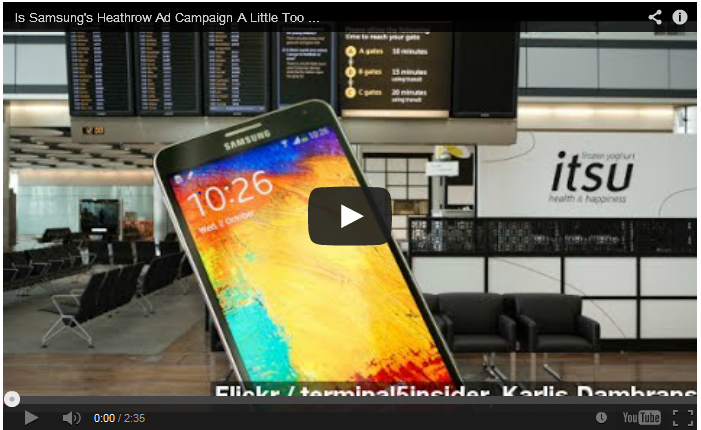
3. Samsung rebrands Heathrow Airport terminal

For two weeks this year, travelers using Terminal 5 in London’s Heathrow Airport, were greeted with a Samsung overload. The Korean electronics company had rebranded the area “Terminal Samsung Galaxy 5.”
The new name was meant to promote the new Galaxy 5 smartphone in what is the busiest terminal in one of the world’s busiest airports. Needless to say, a whole lot of eyes saw Samsung’s signage. The brand also had reps set up in the terminal to demo the device.
The deal was the first of its kind – no other brand has ever temporarily renamed an airport terminal or taken over all signage in one wing.

https://www.youtube.com/watch?v=sAdkREQ4144&feature=player_embedded


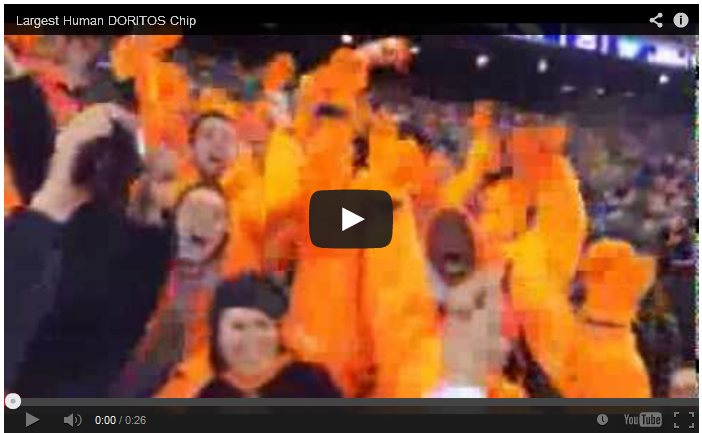
4. Doritos photobombs the Super Bowl

A 30-second Super Bowl commercial this year ran about $4 million dollars. Looking to sidestep that hefty price tag, Doritos crafted a stunt that helped it cash in on the hype while saving millions.
The brand enlisted 30 people in one section of the crowd to wear orange, planning it so they were arranged in the shape of a Dorito. From afar, that section did bear resemblance to one of the popular nacho cheese chips.
The stunt garnered Doritos thousands of retweets and favorites on Twitter. In addition to its social media success, the stunt resulted in record from RecordSetter.com for the World’s Largest Human Dorito.

https://www.youtube.com/watch?v=91DiaAoVH8M&feature=player_embedded

5. DHL gets rivals to deliver marketing messages
DHL pulled off a rather ruthless stunt a few months ago when it turned rival delivery drivers into its own walking advertisements.
The company had large boxes wrapped with thermo-active foil that, when chilled below a certain temperature, turns black. When delivery drivers from UPS and TNT picked up the packages, they couldn’t see the messaging on the chilled boxes. As the boxes warmed up, they displayed the message “DHL is faster.” In order to give the foil time to warm up, the addresses for delivery were intentionally difficult to find and maneuver a huge box to.
In a statement to the Consumerist, DHL denied having direct involvement with the prank, which it said was part of an internal competition by an external agency. DHL says it knew about the stunt, but didn’t know the video would be made public. Despite the questionable authenticity, it’s undeniable that the video’s quick ascent to viral status scored plenty of attention for DHL. 

https://www.youtube.com/watch?v=vHVWegNfQl0&feature=player_embedded

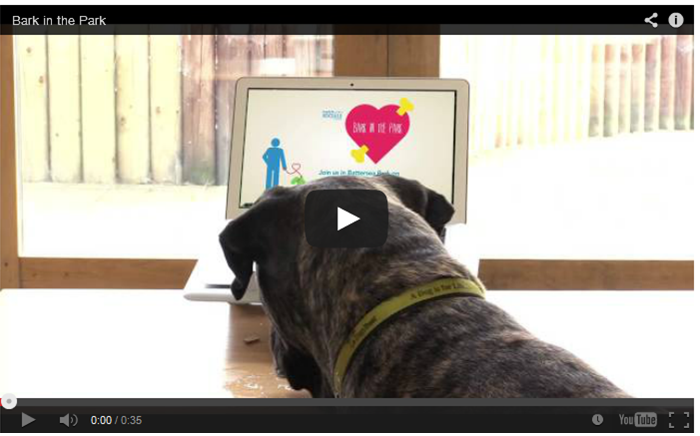
6. Match.com’s dog-food-scented posters

In an effort to find more ways for singles to meet in real life, Match.com launched a series of social events to bring people with similar interests together. The first of those events was aimed at dog-owning singles.
In order to promote the “Bark in the Park” event, Match.com created a bunch flyers and put them around London’s Battersea Park. On its face, that doesn’t seem like a clever marketing stunt, but it’s the composition of the posters that makes this promotion unique – they were all scented like dog food in order to draw in walkers’ dogs and make it impossible to avoid seeing the event’s details.
By essentially marketing to dogs, Match indirectly reached their owners in its bid to attract more singles to its match-making service.

https://www.youtube.com/watch?feature=player_embedded&v=1Q8LziFisNw


Monday, May 5, 2014

If a Tree Falls in the Forest and No One is There to Hear It....

There is a great article in the May 3rd New York Times by David Segal titled The Great Unwatched.

Take a moment to read it.  The topic is not new to this post, but it provides a unique perspective of the video aspect of online advertising. 

One of my favorite passages.. “There is so much junk between us and the companies that buy ad space on our pages it will blow your mind,” he explained. “It would take us weeks of research to figure out which ad network provided that ad.” Alex Treadway, The Daily Caller

The video fraud problem is not new, but it is becoming more important.  

"The very best marketing comes from observing consumer behavior and inserting your message into their behavior."  So as the number of videos online has increased and consumers spend more time watching them, the race is on to monetize this behavior.  And anytime there is a chance to make money, you will have individuals who will attempt to cheat the system.  See 51% of Web Traffic is Fraudulent.

So what is the industry to do?  One possible solution is to embrace hiring third party online auditing firms like BrandAds.  So you receive the ad network/exchanges click, impression, CTR report and you independently verify the information by hiring firms like BrandAds to authenticate the data.  (Full discloser - I do not know anything about BrandAds other than what I read in the NY Times article.) 

Yes, I know this will cost more money.  Build it into your pricing model.  As an individual who has been on both sides of the media buying desk, I am more than willing to pay a few more cents for verifying that the inventory I am buying is legitimate.  This verification happens all the time in television using spot logs.  As a buyer you can be assured that your 5:19:00 pm spot ran on KSAT.  No guessing, no wondering, no hoping.  It is an expected behavior in the business.

And yes, I know it looks like we don't trust our ad network/exchanges to accurately report this information.  It is because we (the industry) don't trust the information we are being given.  Too much secrecy.  Not enough transparency.  I hope this isn't the only solution, but perhaps it could be the catalysis to get our industry to act.  Our reputation is on the line.